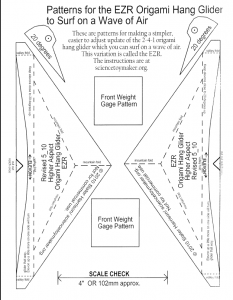
Why You Need Front Weight on "Flying Wing" Gliders, and What to Use
Notes:
I do not include weights when I send boxes of foam sheets because the sheets can be made into various gliders, requiring diffenent weights. But don't worry. You can easily make your own weights at no cost or almost no cost
If a video would be helpful for figuring out front weight, then skip through this video until 6:32 (or 6:10 if you are unsure about folding angles too).
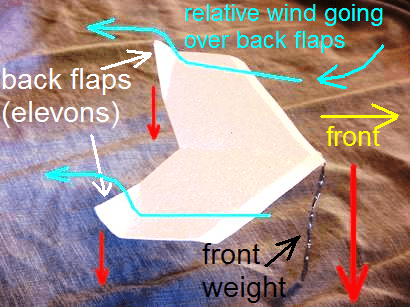
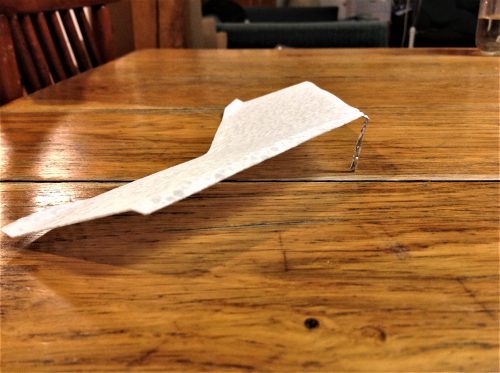
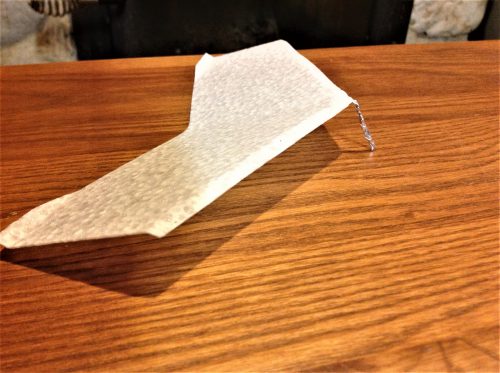
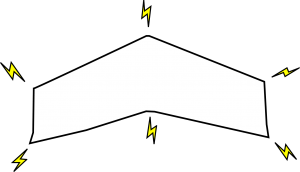
Mosquito, Jagwing and other "flying-wing" type air-surf gliders--that are all wing and no tail--are the best to fly as walkalong gliders. Since they do not have a tail, they need weight in the front and flaps in the back for stable flight. Here’s how it works:
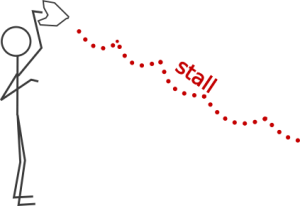
If you drop a glider with rear flaps but not enough front weight, it stalls.
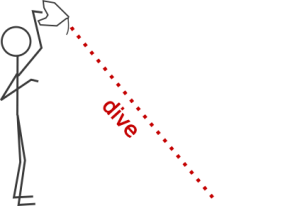
If there is too much weight in front and/or not enough bend in the rear, then the glider dives.
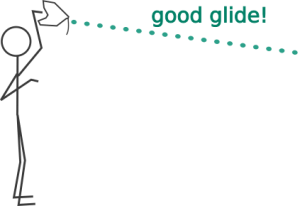
When the rear flaps (elevons) and the front weight are balanced the glider does not stall or dive.
As per Newton’s 3rd law of motion (action and reaction), when air is forced up by the back flaps, the reaction is that the back of the glider is forced down, which is the opposite of a dive. When you get it adjusted correctly, the front weight and back flaps balance out each other perfectly. The weight prevents stalling and the flaps prevent diving. The result is efficient, stable, elegant gliding!
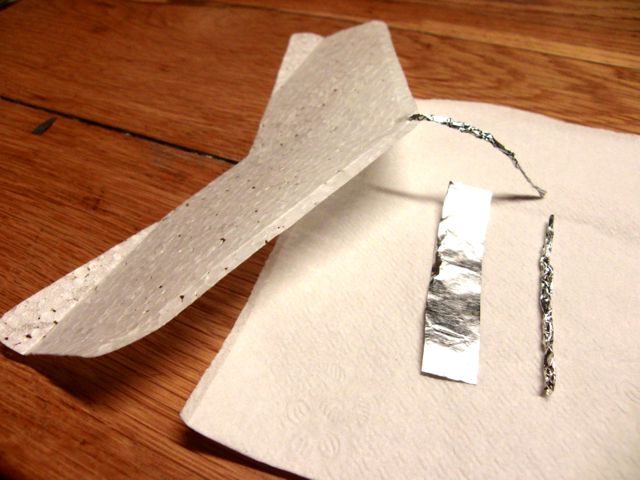
What to use for front weight: aluminum foil, copper wire
Aluminum foil
We think of aluminum as a lightweight metal--and it is compared to other metals--but it is still over twice as dense as water.
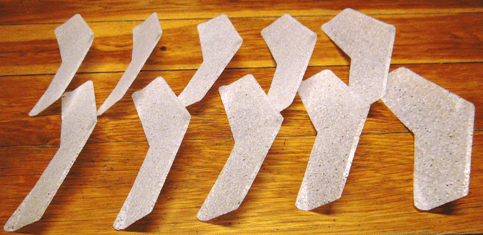
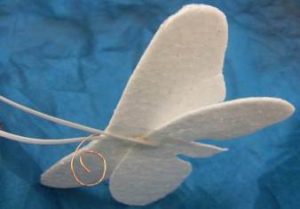
A strip of aluminum foil about 13 mm (1/2") wide, then crushed and rolled into a sort of wire, is an excellent front weight.
Aluminam foil is more widely available but it can be a lot of work if you are making lots of gliders.
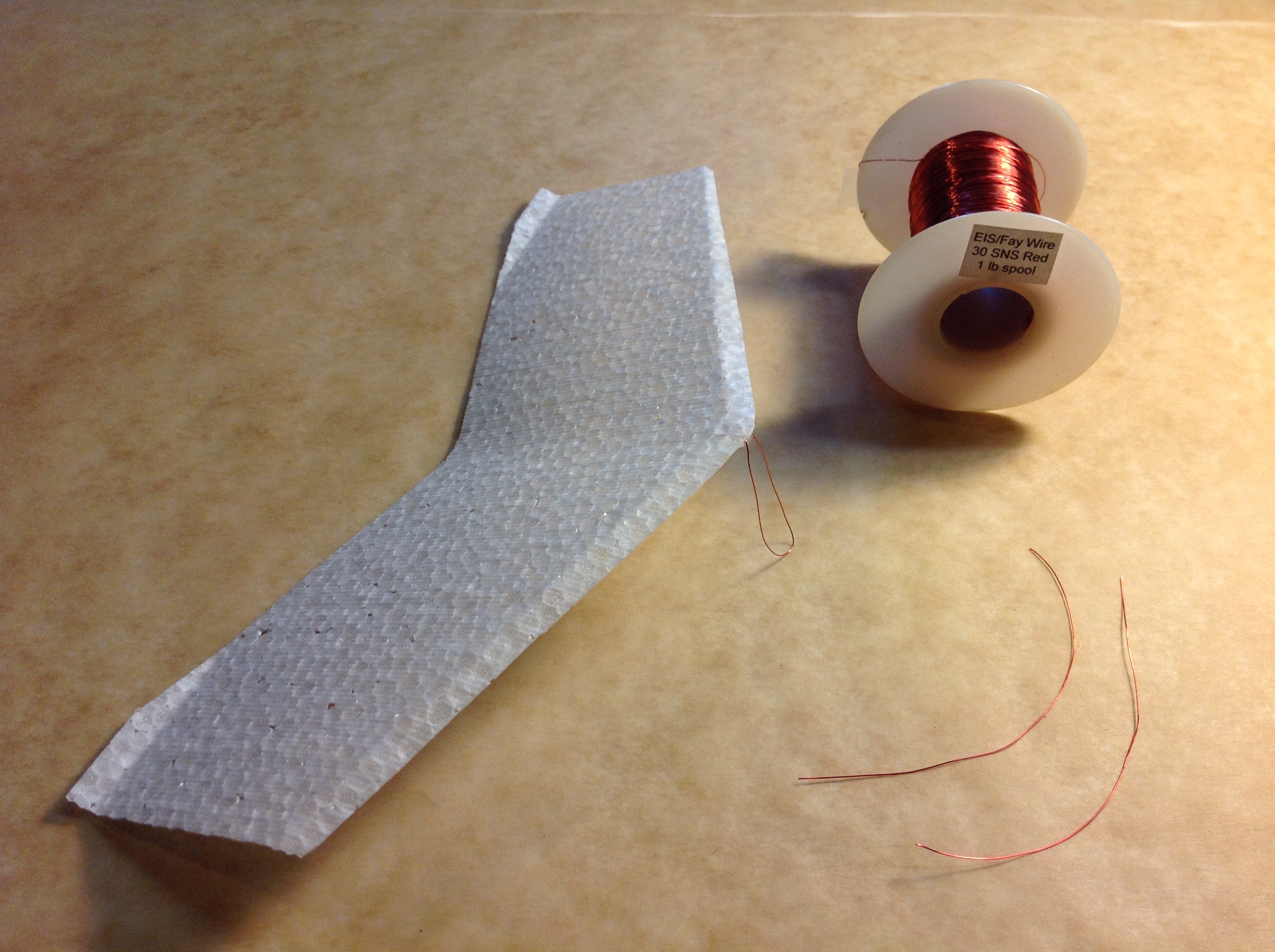
Copper Wire
copper wire works better if you are making a lot and you want fast production.
The easiest way to adjust front weight.
Getting “flying wing” gliders adjusted will become intuitive and easy, but it can be confusing at first. I suggest starting by:
Bend the back flaps (elevons) to about 45 degrees up, then…
Add weight to the front until the glider does not stall in test flights. But it the glider dives, you might have too much weight. Then, when you are close...
If the weight is long and thin, you can micro-adjust by bending it more forward if it stalls, or more back if it is diving. This shifts the "center of gravity" or balancing point of the glider. Bending forward is just like adding more weight. Bending backward is just like cutting off weight.
Contact me if you still have trouble with getting gliders adjusted.
Temporarily out of stock -- We are making some changes to this. I'm also working on a video about Ultra Light Foam.
At 6 to 7.5 kilograms per cubic meter density, Ultra Time Warp Asia is astonishingly lightweight--only about 5 times more dense than air! Because these gliders weigh less, they have a much thinner front wire. Time Warp Asia foam is more delicate and easy to tear, but if you can handle it carefully you'll experience almost magical, slow, efficient flight. I use gliders made of it both for teaching beginners how to fly--because the slow flight gives them time to think and react--and for advanced flight projects like hands-only flying because they are so light and efficient. Here is how to fly. Here are tips about teaching groups to fly air-surf gliders. Read these notes before ordering.
I have just uploaded a video that supersedes previous videos about slicing your own scrap foam to make walkalong gliders. It’s a rough draft, but 99% in final form.
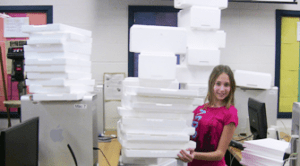
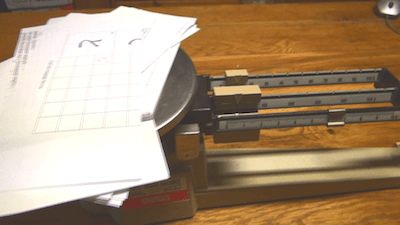
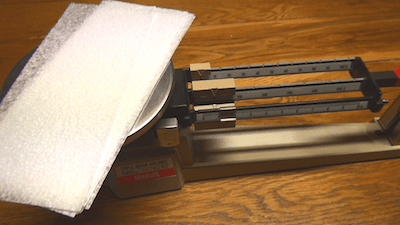
It is difficult for people to understand that paper is very heavy when compared to foam. But imagine how heavy these stacks would be if they were books or newspapers instead of foam! The foam is cut into thin (0.6 mm) sheets, many times lighter than a sheet of paper of equal rigidity.
EPS (expanded polystyrene) foam is the ubiquitous white foam made of spheres (beads) that appear as circles when cut, used to make everything from foam cups to foam coolers to molded electronics packaging to sheets of rigid insulation. It is made from hard, dense plastic polystyrene beads that are “puffed up” (expanded) like popcorn or puffed rice: mostly air. The expanded spheres are fused together.
Expanded Polystyrene foam is made in different densities (the ratio of weight to volume). In North America, density is usually still measured in pounds per cubic foot. In most of the rest of the world it is measured in kilograms per cubic meter.
There are lots of other kinds of foams—and I have experimented with many—but EPS always comes out on top, because it has the highest strength/weight ratio.
Why is EPS foam better than paper for walkalong gliders?
Not only is the sheet of printer paper 8 times heavier than sheet of foam with the equivalent surface; the paper is still not stiff enough to keep from bending too much. Everybody has wishful-thinking that paper will work well for walkalong gliders. It doesn't. And thin .6 millimeter foam is inexpensive to buy, or you can even slice your own.
Everybody wants to use paper because we are so familiar with paper airplanes and origami. But to match the rigidity of a .6mm slice of EPS foam requires a thickness of paper that is many times heavier. Weight is bad for gliders, at least when you are starting out. Heavy gliders fly fast. That’s ok if are good at walkalong flying and you want to race but bad for beginners, who need time to think and react as they learn to fly. There is an exception. The rotating kind of paper glider invented by John Collins (the Paper Airplane Guy)that he calls the “Tumbling Wing” and uses the Magnus Effect, flies more slowly. However, most people find the paper spinning gliders more difficult to launch and fly than foam gliders; and in humid weather, paper becomes limp and useless. But paper is free. You can see some paper designs here.
What is Time Warp Foam?
The lowest density EPS foam made in North America is custom made for me, specifically for gliders. It weighs 0.58 pounds per cubic foot (9.3 kilograms per cubic meter). For comparison, the lowest density EPS foam commonly available in North America (usually as insulation, sold in building supply stores) is 1 pound per cubic foot (16 kilograms per cubic meter). And it can be even denser.
I have to get the low-density foam a truckload at a time (shipped as a bunch of giant blocks measuring 3’ by 4’ by 8’) because there is no commercial use for it in North America. I do not mean to discourage do-it-yourselfers who want to cut their own foam. Even commonly available white insulation foam is much lighter than paper. And if you can find a furniture store where they import from China, you might be able to find lower density foam there (see below). It is used as packaging/padding for the furniture. You can see how to cut your own foam here .
Unless otherwise specified, the gliders and foam sheets sold by sciencetoymaker.org are Time Warp. UltraLight foam (see next entry) is even less dense, but it has to be imported.
What is UltraLight Foam?
There is also a special foam called UltraLight. In Asia (particularly China; I've heard maybe also in India) the manufacturers are allowed to use much higher concentrations of the bead-expanding agent, pentane. Pentane is regulated in most other industrialized countries. This EPS foam from China can have density as low as 4.5 kg/m3. If you consider that air itself has a density of about 1.225 kg/m3 (depending on altitude, temperature, etc.) then it’s is only about 4 times heavier than air, which is quite remarkable! By comparison, water is about 800 times more dense than air and paper is over 500 kg/m3 density.
So I call this extremely low-density foam that can only be made in other countries “UltraLight foam”. It is slightly less rigid than Time Warp foam and also a little more delicate to handle (rips more easily). But if you can handle it gently, the gliders made from it fly so slowly it's like magic!
Ultra Light foam is not actually one foam, but many similar foams from 4.5 to 7 kg/m3, manufactured throughout China. Each kind has it’s own personality and cuts differently. I do not usually make the foam that’s less than 5.5kg/m3 into gliders because that stuff has very large beads with very large gaps in between. The gaps do not affect the flight, but it does rip even a little more easily. Perhaps I will make it available to experimenters if there is interest.
So where do I find this royal class of extremely low-density UltraLight foams? In the recycling bin!! My good friend Rob Beiter manages several furniture/appliance stores in central Pennsylvania and has better things to do than collect foam scraps from packaging. And yet he kindly directs the rare bits of UltraLight foam from imported furniture packing my way because he supports recycling, science education and non-profit organizations like the Physics Factory.
Although Rob gives us the foam gratis, there is still a lot of processing. So recycled UltraLight takes lots of time for me to sort through, test density, custom cut, etc. (and there's not much of it), so it’s therefore more expensive. If you decide to cut your own foam, you might be able to find and recycle it locally—I recommend that highly
Under ideal circumstances (dead still air, people who can handle it very carefully) the ultra low-density UltraLight foam flies so slowly that it will take your breath away! That slow motion gives beginners lots of time to think and react, so I like to use it when teaching people how to fly. And again when learning to fly with hands-only deflecting the air up. You have to keep your hands at exactly the right place relative to the glider for hands-only flight, constantly recalibrating. That’s easier to do if the glider is moving slowly. Warp gliders are also superior when flying in small, cluttered rooms.
I see pinholes in my sheets of foam—is that a problem?
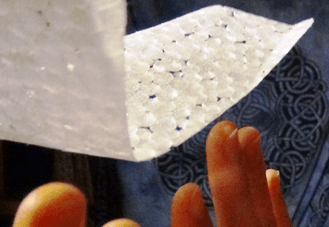
EPS (expanded polystyrene) foam is made of spheres (beads) that appear as circles when cut thin. The holes between the circles rattle some people, but do not affect flying. Foam gliders are superior, both for beginning and advanced flight.
EPS (expanded polystyrene) foam is made of spheres (beads) that appear as circles when cut thin. Because EPS foam is made of expanded spheres, fused together, there are tiny voids between the beads. When we slice the foam very thin, the voids appear as tiny holes. I have experimented with solid foams like Depron that do not have voids, but invariably they are less satisfactory because they weigh much more.
The pressure differential between the top of the gliders and the bottom is very small. The relative viscosity of the air going through tiny holes is high. So the pinholes might be an esthetic problem, but not a flight problem. The lowest-density Asian foam (4.5 KG per Kilogram) has bigger beads, and therefore bigger voids (again, they do not negatively affect flight but do rip easier).
Can you slice your own foam?
Yes, you can collect and slice your own foam. This page and associated video show how. Flying even with heavy foam is many times better than flying with the lightest paper gliders. And if you can find packaging foam from China (see Ultra Light foam section) you will love it. Cutting foam is quite easy when you have Nickel-Chromium (ni-chrome) wire, which is special for two reasons. It is high resistance, so it creates heat instead of a short circuit; and then it stays strong even when hot (unlike regular steel wire). Almost all electric heating devices--from hot plates to water heaters, soldering irons to coffee makers--use ni-chrome wire. It's the stuff that glows orange in toasters, although we don't use it that hot to cut foam.
Hot wire cutting produces some smoke. You are responsible for cutting in a well ventilated place, such as a garage with the big door open; or under a stove exhaust hood.
Paper vs. EPS foam: The numbers
Flying even with heavy foam is many times better than flying with the lightest paper gliders. And if you can find packaging foam from China (see Ultra Time Warp foam section) you will love it. Cutting foam is quite easy when you have Nickel-Chromium (ni-chrome) wire, which is special for two reasons. It is high resistance, so it creates heat instead of a short circuit; and then it stays strong even when hot (unlike regular steel wire). Almost all electric heating devices--from hot plates to water heaters, soldering irons to coffee makers--use ni-chrome wire. It's the stuff that glows orange in toasters, although we don't use it that hot to cut foam.
Hot wire cutting produces some smoke. You are responsible for cutting in a well ventilated place, such as a garage with the big door open; or under a stove exhaust hood.
10 sheets of paper weigh over 16 grams.
10 sheets of thin-cut EPS foam weigh only a couple of grams, and the foam is still more rigid than the paper.
The density of EPS foam is as low as 6 kg/cubic meter (Ultra TW foam). Time Warp foam is 11 kg/m3 (and stronger). Paper is 540 kg/m3. That's not really fair because paper is thinner than foam sheets used for gliding.
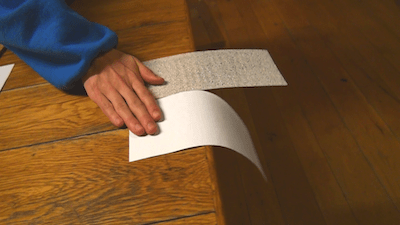
So lets set up a fair comparison. 10 sheets of EPS foam, cut to the standard size that I use for both Baby Bugs and big Mama Bugs (219 mm by 96 mm) weigh 1.3 grams (Ultra Time Warp) or 2 grams (Time Warp). 10 sheets of printer paper cut to exactly the same size weigh 16.6 grams. That's more than 8 time heavier than even the heavier foam.! Furthermore, the foam is much stronger. Holding the end of a piece of foam so that it sticks out horizontally like a diving board, foam bends just a little bit. But paper cannot hold itself rigid at all. You can say that all you have to do is fold/bend the paper so as to increase its rigidity, and many people have done just that: developing clever designs to maximize the strength of paper with folds. But in the end, paper walkalong gliders are far heavier, much more difficult to trim (adjust) and they fly so fast that it takes hours for newbies to be able to fly. And that doesn't take into account the fact that paper becomes even more limp and useless in all but the lowest humidity air.
10 sheets of thin-cut EPS foam weigh only a couple of grams, and the foam is still more rigid than the paper
I started with paper gliders because I did not know about thin foam gliders. It was frustrating to try to teach my students how to fly walkalong gliders. It took a long time and many students never got it. It only worked in winter when the air was very dry. When I started using foam, I could get everybody flying. Some kids still worked harder and excelled more than other students, but everybody got into the air. I have not worked with paper gliders for years, and I don't miss it.
Measuring foam density
Density is weight divided by the volume (length x width x height) of the foam block. In North America it is expressed as pounds and feet, but I (and the rest of the world) prefer metric kilograms per cubic meter. You can easily convert to pounds/foot if you need to.
I use a triple beam balance to measure weight but you could use a postage scale. I express 6 grams as .006 of a kilogram in my equations; 22 cm as .22 of a meter; 95 mm as .095 or a meter, etc.
These are exciting times! On one hand our foam sheets are much better than ever before: 45% thicker without any added weight. The sheets and gliders are still thin, but it's not like handling soap bubbles anymore! On the other hand, the instructions for making the gliders have not kept up. Better directions are in the pipeline. So if you have flight experience or are a repeat customer, I think you'll love the new foam sheets for making gliders. If you are new to flight, then you might want to stick to ready-to-fly gliders--which are better than ever--until I can finish the new instructions. GOOD CHANGES COMING SOON!
We're working out new technology to make stronger foam sheets without adding any more weight. So the foam store is closed until early July. We are also trying to finish a new instructional video for making and flying gliders.
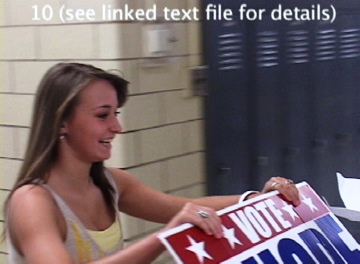
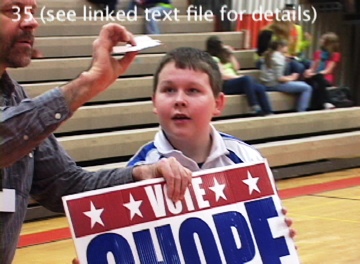
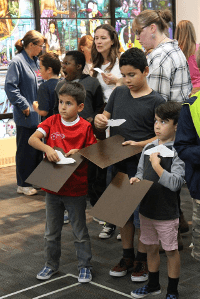
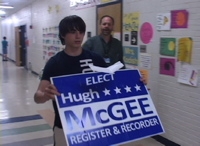
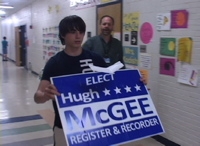
Does it seem like I'm trying to get someone elected? Actually, the election signs are old, but they make great air deflectors: large, lightweight and durable. Pizza boxes and other pieces of cardboard also work well.
So you've seen a video of air-surfing, AKA walkalong gliding. It looks really cool and you're thinking how much you'd like to do it with your school students/ scouts/ camp/ learning festival or homeschool group. But you want to know what you're getting into. You want some details, like what age groups will it work with, how to start, how much time and space are needed, how to prepare, etc. You've come to the right place. For the past 8 years I've been happily obsessed with walkalong gliders. I've taught lots of people how to fly in schools, science museums and events; learn from my experience (translation: learn from my mistakes)!
Consider trying simple paper walkalong gliders first ("free and frustrating").
Paper gliders are easy to make and a complete pain in the neck to adjust, launch and fly--but worth the effort!
From my own experience and from years of getting feedback from people, I noticed something: groups who struggle with paper gliders first tend to do exceptionally well when they switch to foam gliders. And I do mean “struggle”! Paper gliders are much heavier and difficult to launch. The bend angle has to be just so. Expect moaning and gnashing of teeth. But they seem to gain something by trying (hmmm, sounds like a metaphor for life). Furthermore, newbies wreck gliders with their nervous fingers and general carelessness. But with paper gliders it doesn’t matter! They are quick, easy to make and cost essentially nothing. If YouTube is blocked at your school, you can still view this compressed video instructions. The video starts with lauching the gliders up in helicopters, but there are also instructions for flying them as walkalong gliders. Here is the transcript of the narration, plus some additional details.
Emphasize to the group that the foam/gliders are very delicate.
All other challenges can be corrected, but if a kid mangles their foam glider, it is difficult to repair (see start with paper, just above). The Achilles heel of light foam gliders is their fragility. Kids, and even adults, do not naturally show the amount of care that is needed. Then imagine that you are a kid in a group of peers, and that you are about to try a new physical activity where you might look awkward, and somebody might laugh at you. They get NERVOUS HANDS, clenching anything they hold with a death grip!
Without some forewarning, a group will have the gliders in shreds in minutes. I say things like, "It's like having a pet butterfly". I tell them to always be aware of what their hands are doing and relate how I have the same problem. I tell them about how careful they have to be before they actually handle the gliders and continue to remind them throughout the session.
Feeling how to fly is better than being told.
I could yap on and on with flying tips: keep the deflecting board more vertical like a wall, keep the glider high on the board; don't let the glider get ahead; gain altitude and steer...nobody can keep so many things in mind at once! I have learned that teaching how to fly is best done tactile-kinesthetically. My most effective teaching is walking next to people--whether it is little kids, teenagers or adults. I tell them that we will both hold onto the board but let me actually control it. I launch the glider, since that's yet another thing to think about. After flying together for a bit I say, "It's all yours" and let them take over. I observe how they crash it. Did they steer it into the wall? Did the glider just slowly keep losing altitude? Did they flatten the board instead of keeping it sloped? Whatever the problem is, I walk with them again. I do a little of whatever they did wrong, then correct it and again hand it off. After a few such walks many people are flying well in minutes--not because they understand or remember all the tips, but because they are gaining an unspoken feel for flying. Of course, this means that you have to learn how to fly ahead of time. I urge you to do this anyway. Someone in the room should actually know how to fly walkalong gliders; it will save a lot of frustration.
Teaching people to fly walkalong gliders is easier than actually building the gliders. Teaching people to fly, but not build, might be better at some events.
I love to make things, and I love to set up teaching situations where people are making things. And I have bent over backwards (an idiom) making written instructions and video about how to make walkalong gliders. However, from experience I know that there are some situations where teaching a group of people to fly with already-made gliders works better than making gliders. If you don't have much time, (perhaps 1 1/2 hours) think twice before getting yourself into a situation where you are frantically trying to finish. That will just lead to chaos. Another thing to think about is the age of the group. Many kids starting at age 10 or so have acquired the hand/eye coordination to fly gliders. But I would not make the gliders with a group unless they were at least teenagers (and even many teenagers have difficulty following directions). It's a different dynamic when you are working with just a few people, but this article is about working with groups.
If you are not sure, consider this possibility: Perhaps you can set up one event where you just teach the group how to fly. Then, if that goes well, you can have another event where they make the gliders. You will have had a chance to get to know your group. Were they gentle with the delicate foam gliders when flying? If not, constructing is going to be even more difficult.
In my opinion, kids under the age of 9 or 10 do not usually have the coordination to fly solo.. ... but if they let you copilot then they can still enjoy flying. At the same event the Boy Scouts were teaching mall-goers how to fly after I taught them.
Even if you do decide for the group to actually make the gliders, have your group fly some gliders first. Make them only after they have flown. Have some gliders ready to go.
I know that sounds backward. You would think that it makes more sense to make, then fly, right? I did it that way for years. Here's why I switched.
Flying is easier than making. When you fly first, then building gliders makes more sense. Even if people have experience with origami, there are many parts of constructing the gliders that are counterintuitive. But if they fly the glider and see how the glider is made, then they are less likely to make a mistake when building. Instead of one giant step (building and flying), you break it down into two easier steps--flying, which is easier; then building, which is made easier by the first step of flying.
Practice flying before the event.
I know, we're all busy, but I think it's a good idea for people to know what they are doing before teaching others. Maybe that is obvious, but I often see people try to figure it out at the same time people are depending on them for direction. If you are making gliders with the group, make a couple of gliders before.
I can think of a possible exception to the "practice ahead" rule. If you are working with a group of sharp high school or college students--and you know that they can follow instructions--then they might be able to figure it out themselves with the video or written/ illustrated instructions. But I think middle school and younger students will need more of your guidance.
Consider the ratio of students to you, the teacher.
When I hear from someone who is very enthusiastic but does not have much teaching experience; and they tell me that they plan to get 30 kids making and flying gliders, I see disaster ahead. It is not even enough to have some other helpers in the room. In my opinion, they have to be helpers who have practiced ahead of time, just as you have.
But once you know that, amazing things are possible! I got some wonderful feedback from Shannon Babb with Utah State University Extension and STEM coordination with Utah County 4-H. Through teamwork, Shannon reported that they got nearly a thousand people flying.
"Oh my goodness, the event went so well. The teens had so much fun learning how to make the gliders and caught on so quickly, that they wanted to teach some of the younger youth how to fly gliders at the aviation event that was open to all ages later that evening. I will admit I was a bit nervous about doing the activity with a young age group, but the high schoolers really stepped it up and worked one on one with the younger kids. By the end of the evening, everyone was thrilled to have interacted with the gliders whether they had the skill to figure out how to fly them or not.
"Now that we have an experienced teen volunteer base that are interested in teaching all ages how to fly, and older youth and adults know how to build the gliders, I have a feeling that they are going to worm their way into a lot of future activities.
"Honestly if the teens hadn't taken charge there is no way that the walk-along glider activity would have worked without their leadership."
Be aware of the psychology of your group. Some adolescents are terrified of being in situations where they might look stupid.
Most of the time I see nothing but unbridled enthusiasm when I am teaching people to fly. However, air-surfing gliders is a physical activity, and a very new physical activity at that. Like all new things, sometimes we look a bit awkward and silly until we get it. I find that at about 13 or 14 years of age, some kids become very extremely selfconcious when they are in groups, and this can be a very destructive group dynamic when trying to get them to do something new. When adolescents feel vulnerable to judgment or teasing, some shut down and stop trying. Obviously, you will want to create an emotionally safe atmosphere and nail teasing before it starts.
Some people will disagree with me about this next tip, but I also try to start with low expectations. I tell them that it took me days to learn air-surfing (true) and that I don't expect them to be able to do it in just one day. So if they don't get it, they retain some dignity. If they do get it, then they are quite happy (and sometimes you see the other side of insecurity: obnoxious bragging). So maybe you won't use my methods; but do be mindful that with some age groups, psychology can be a force to be reckoned with.
Think about the space your group will need for flying. Be mindful of air turbulence (take note summer camps).
I do not live in a very windy region but, except at dawn and dusk or certain completely overcast days, it's impossible to air-surf outside. The very slightest breeze that you can barely feel on your face is too much. That does not mean that you need a gymnasium. With the very low-density foam I call Time Warp, the gliders fly slowly and are maneuverable even in small rooms. And for larger groups, the wide halls, lobby, cafeteria and auditoriums in public buildings work well. But, always scout out the location first. Many science museums and even some schools have aggressive ventilation systems. Be sure that there are calm places with still air, or else flight will be impossible.
Encourage your group to spread out.
Kids are very social, and they often clump together even when there is enough space. But it can be a problem even if they are not actually colliding. People moving through the air create air turbulence. Try flying a glider walking behind someone walking a few feet ahead of you. It's impossible because air swirls behind people in turbulent, circular vortices.
Links
This article is about flying walkalong gliders, and that opens up teaching moments about flight.
Walkalong gliders stay in the air the same way that hang gliders can stay up for hours; by flying in rising air. Although this video is about hang gliders, much of it applies to walkalong gliders.
I am starting to hear of people who are using walkalong flight as an analog for piloting, particularly cadets in CAP (Civil Air Patrol). It's a great way to get a feel for takeoff, flight patterns, turbulence, approach and landing. This is an old but still good video about aerodynamics and piloting.
Like all good science discovery stories, walkalong gliding history is full of people with unconventional ways of looking at the world, catastrophic and fortuitous accidents, serendipitous insights, cross-pollination, community and collaboration. You can see interviews with the historical innovators here. And a little farther down the page you can see links to You Tube videos of other people doing interesting things with walkalong gliders.
Thanks for taking the time to show others how to fly. Please let me know of your successes and challenges. I don't have all the answers. If you have tips that worked for teaching with a group, share them.
The embedded video above is about making and flying a simple kind of glider, or sending it hight up in helicopters.
Below is the transcript of the narration, plus some additional details. The numbers are time markers that tell you where to go in the video to see it. If you have a question, you can leave a message in the comments section at the bottom of this page or contact me about it and I’ll try to answer it on this page.
Although I have tried to be very forthright about saying that these paper gliders are harder to fly as walkalong gliders than thin foam gliders, I still think it's a good idea to start with paper gliders. It might be a struggle with lots of frustration, but it's a worthwhile struggle nevertheless. I've observed that groups that start with paper gliders do very well when they move to foam gliders. Maybe it's because newbies tend to crush gliders with their careless or nervous hands. But it's so fast and easy--and essentially free--to make new paper gliders as needed. Whatever the reason, it's a good idea to try flying paper gliders first; the effort won't be wasted!
0:00 Hi I’m Slater aka sciencetoymaker. These strips of paper tucked away in the helicopter: do they look like gliders? Let’s try them out in the Troposphere! When you become fascinated by things that fly, then you become aware that we live at the bottom of an ocean of air called the Troposphere. Here’s a good page about that.
And it’s even possible to fly this strange glider inside on a deflected wave of air.
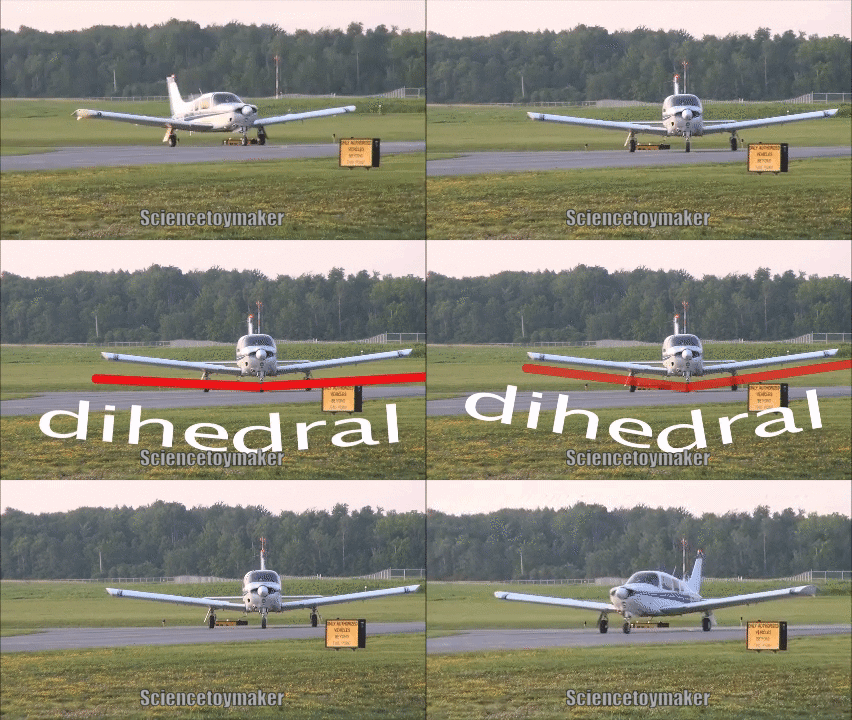
An example of dihedral
0:35 The name, Dihedral Magnus Effect glider, is long, but it’s quick and easy to build. But first, dihedral is the slight upward bend of airplane wings for better flight stability. Without dihedral, the glider slips sideways. Then the Magnus effect is what makes spinning soccer balls curve as if by magic. Physics Girl did a stellar job of explaining the Magnus Effect in this video.
Even when the glider is traveling so slowly that it seems like it ought to stall and dive out of the air, the Magnus Effect keeps giving it… almost magical lift.
1:10 And when I fly the Dihedral Magnus Effect glider like this, it’s called walkalong gliding. The upwardly deflected air lifts the glider up as much as gravity pulls it down—similar to the way hang gliders can stay in updrafts for hours, not just glide.
I don’t want to oversell these. Although Magnus gliders are easy to make and launch in a helicopter, the trade off is that they are not very efficient; and paper is actually quite heavy. So they’re difficult to launch and fly. Fixed-wing walkalong gliders made of 0.7 millimeter foam are easier to fly. But hey, paper’s here and free, so let’s make a glider now.
1:57 To start you’ll need some telephone book paper. Newspaper is a little heavier still, but newspaper can be ok too. Now here’s something interesting: all machine-made paper has a grain, so paper is much stronger one way than the other. I’ve cut two rectangles out of one phone book page; identical except that one is parallel to the text while the other one is long perpendicular to text. When you cantilever them off an edge, this one is clearly more rigid so we’ll cut strips parallel to the text. But test your assumptions! This small newspaper is strong parallel to the text; but this large newspaper is the opposite!
2:43 The strips should be about 25 mm wide by 155 mm long (1 inch by 6 inches). To get the dihedral, you fold gently in half. Folding in half before cutting means less cutting. It also insures symmetrical halves, so it will glide better. You can save a lot at a time by folding and cutting lots of gliders at once.
3:11 You might be able to launch the glider now, but another fold will make it stronger. Origami people say that this is a valley fold. Make a gentle mountain fold perpendicular to the first fold, then mostly unbend it. That hint of a fold makes it less floppy and creates a crude airfoil that helps the glide a little.
If you have too much dihedral angle, then it will not fly. Just a little.
3:39 If you are sending gliders up as a payload in a helicopter, slide 3 or 4 under the rubber band at the bottom. The rubber band ejects them as it unwinds. See this link to learn more about how to launch gliders.
4:01 For walkalong gliding, you need dead-calm air. That usually means inside, away from air vents. I’ve been in many science museums where it was all but impossible to fly because of air turbulence. However, usually I was able to find a hallway or something where the air was still enough to fly.
If you want to try walkalong gliding, your first hurdle is launching. Your glider should glide away from you, not toward you. Hold the glider from the back like this. There is only a slight dihedral. Give a short push—really just a tiny flick of the wrist--and let go. You can also try launching like this. Practice launches and when 2 out of 3 glide straight, then you’re ready to fly. Experiment with dihedral angle.
4:38 The bigger your board is, the better. The top of a pizza box works well. Hold the board almost vertical. It has slant a lot to deflect air upward. Launch high. Keep the glider level with the top of the board. Keep the board so close to the glider that it almost blows over the top.
5:05 To gain altitude, make the top of the board go so close that the glider goes over the top. Notice how it went higher just before going over. So this time, raise the board so the glider can’t go over; it gains altitude instead. Try pulses of getting closer to see where the sweet spot is.
5:35 You turn by pushing one side of the board closer to one side of the glider. You cannot make sharp turns with this glider and fast moves don’t work. Keep your board smooth and steady.
5:50 I learned to fly with a similar Magnus glider and I struggled for weeks before getting it. It takes even longer for the pioneers who charge ahead without anyone to show you how to fly. Flying the glider is like riding a bike: it takes time and practice to learn, then gets easier.
6:23 Let’s tip our hats to John Collins, AKA the Paper Airplane Guy, for inventing the first Magnus Effect paper glider, which he calls the Tumbling Wing.
Dihedral Magnus Effect gliders made from thin slices of foam are not affected by humidity; and they are so light that they fly slowly. In fact, I can fly them with just my hands deflecting the air. You can have a single piece of North American standard foam from sciencetoymaker.org, cut it in half and sliced into 13mm or ½ inch strips. They’re very easy to make but are still tricky to launch. Foam fixed-wing gliders are easier to launch but harder to make. Life is full of tradeoffs.
7:09 Besides being delicate—you need to handle them very gently--the foam gliders are even more sensitive to how much dihedral you have. If the glider seems to slide or it keeps tipping over like this, then you need more dihedral. If the glider is clunky or won’t glide at all, then less dihedral. There’s not much difference between too much and not enough, so you’ll have to experiment
The first time I encountered gliders levitated and controlled by an invisible wave of deflected air, it felt like magic! Surely this was going to take the world by storm, the way Mentos and Soda swept the world as a science activity a few years ago. But while researching the history of walkalong gliders, I was surprised to learn that the concept of surfing the gliders is decades old. Knowledge about them was cloistered within a few aerospace engineering and hang glider communities—definitely not in schools.
As an educator, I set about to make walkalong gliders accessible to regular people as a fun science activity by developing thin (1/2 mm) foam gliders that are an order of magnitude lighter than paper. Only a few times denser than air itself, they fly so slowly that beginners have time to think and react. If I walked beside you and we both held onto the board, then you could learn to fly in minutes because that way you gain a feel for flying. Soon you would be swooping around your house flying as easily as you ride a bicycle.
And the thin foam gliders are so efficient that advanced pilots (with practice) can levitate them with only their hands deflecting the air! The foam sheets are inexpensive to buy or slice your own--no one is excluded for lack of money. I find that kids around the age of 10 start having enough coordination to fly them.
So NOW the activity is going to catch fire, right? No. Any knucklehead can drop Mentos in soda, but walkalong gliders demand more. You don’t need to be flight savvy to start, but you have to pay attention to details. For one thing, the thin, light foam is also very delicate. The gliders won’t break from crashing into walls, but careless/nervous hands will wreck them in seconds. Even adults lack an analog for handling something that carefully--unless they’ve cuddled with a pet butterfly. Furthermore, the gliders need dead-still air, which usually means not outside except at dawn and dusk. Even aggressive HVAC systems and cause too much air turbulence inside. And although I can easily show people how to fly, being the first in your region with nobody to show you is more difficult.
Flying an already-made glider is the best way to begin and all packages come with a couple of RTF (ready to fly) gliders. This video shows the best way I know of how to learn.
Using gliders made from thin, low-density EPS (expanded polystyrene) is the best way to get started. Foam is extremely lightweight and slow-flying, so you have time to think and react. Thin sheets of EPS foam are much lighter and more rigid than paper, and inexpensive, too. Get gliders and foam here.