
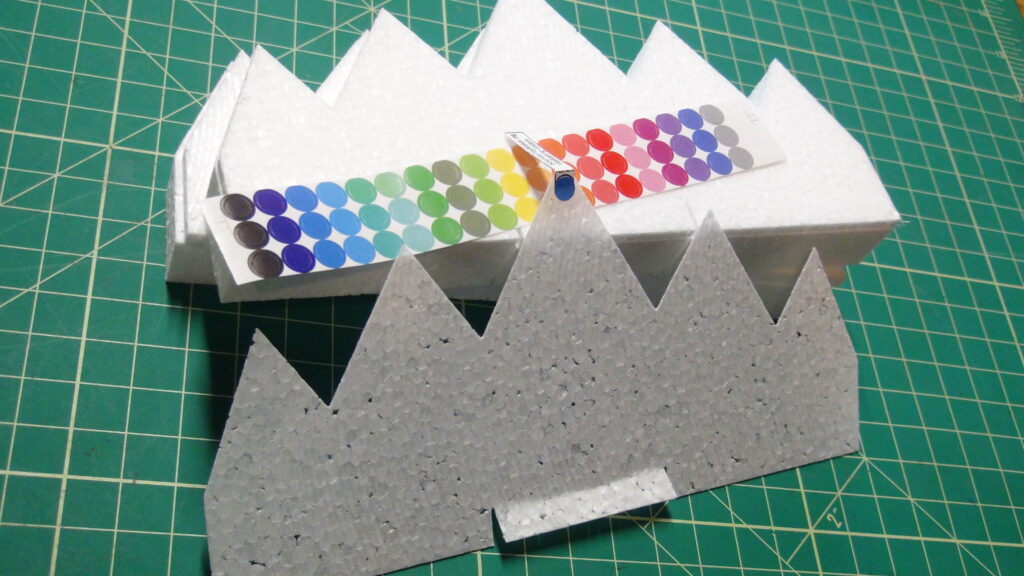
I redesigned the Jagwing and cut the price in half. Here’s why.
For years ready-to-fly Jagwings have been the favorite glider. Although not the most efficient design, it’s stable in flight and not fussy about adjustments. And it’s still efficient enough that you can learn to fly it without a board—only hands deflecting the air to provide lift.
But I’ve been uncomfortable with the ready-to-fly part. It’s felt like I’m depriving kids of the accomplishment of making their own. The original Jagwing DIY making was too complicated and took too long. So I’ve redesigned the Jagwing to have all the qualities that people love, and also be quick and easy to make. I can make one in less than a minute, although of course it will take longer the first time, following directions. You can see the illustrated directions, below. The exact differences between the old and new Jagwing are detailed at the bottom of this page.
At some point I will have a polished step by step video for making and flying, but for now I only have written, illustrated assembly directions (below, scroll down). For learning to fly—including how to fly hands-only—this old video is still good despite some rough editing patches. It also covers some of the science of walkalong gliders.
Note that the New Jagwings are still made from thin foam, and they have to be handled carefully. They can crash into a wall a thousand times and be no worse for the wear, but excited or nervous hands can warp them to be unflyable in a second. The Spinny glider is made from foam almost 3 times thicker and might be a more forgiving choice as a first glider.
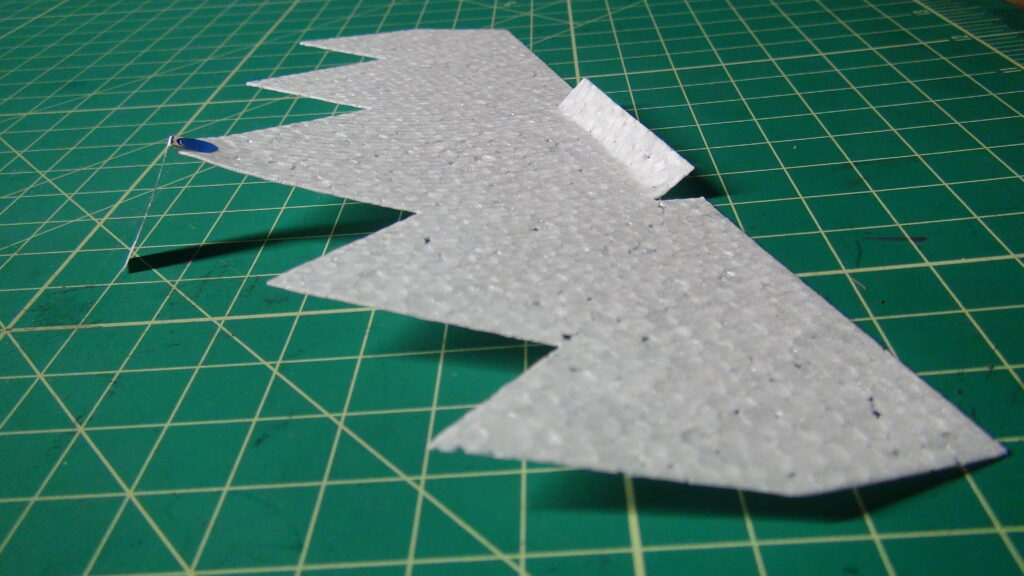
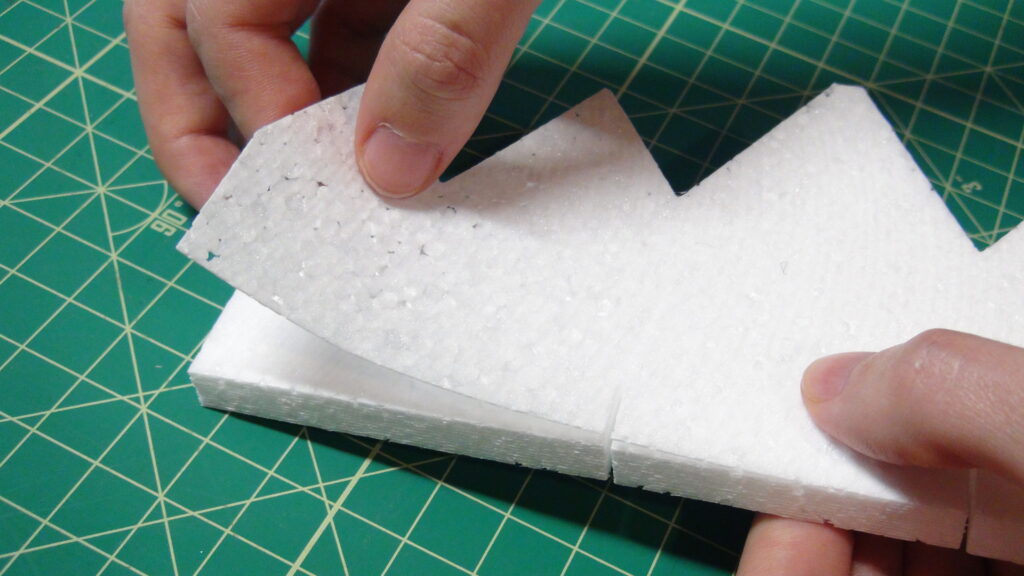
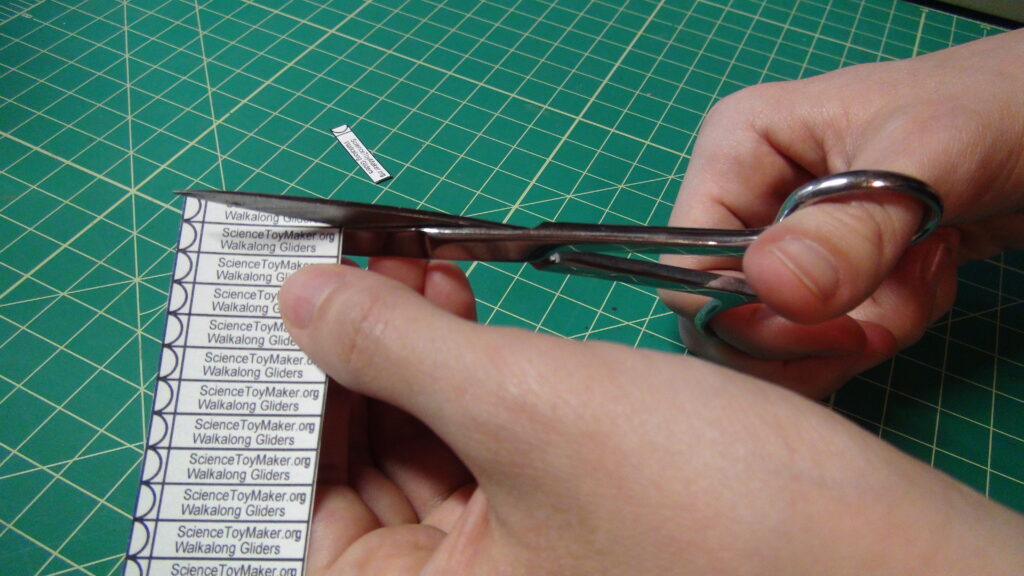
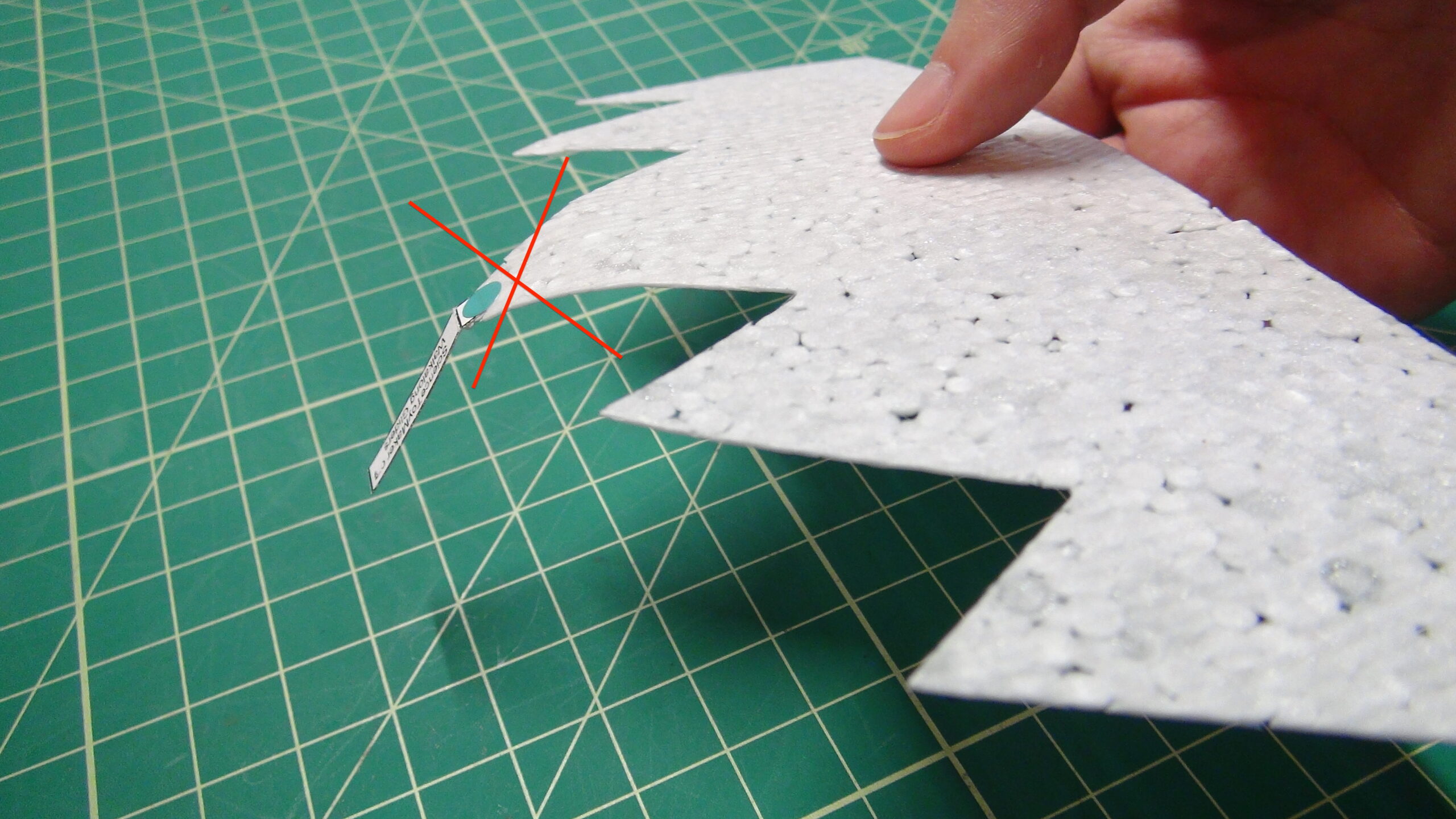
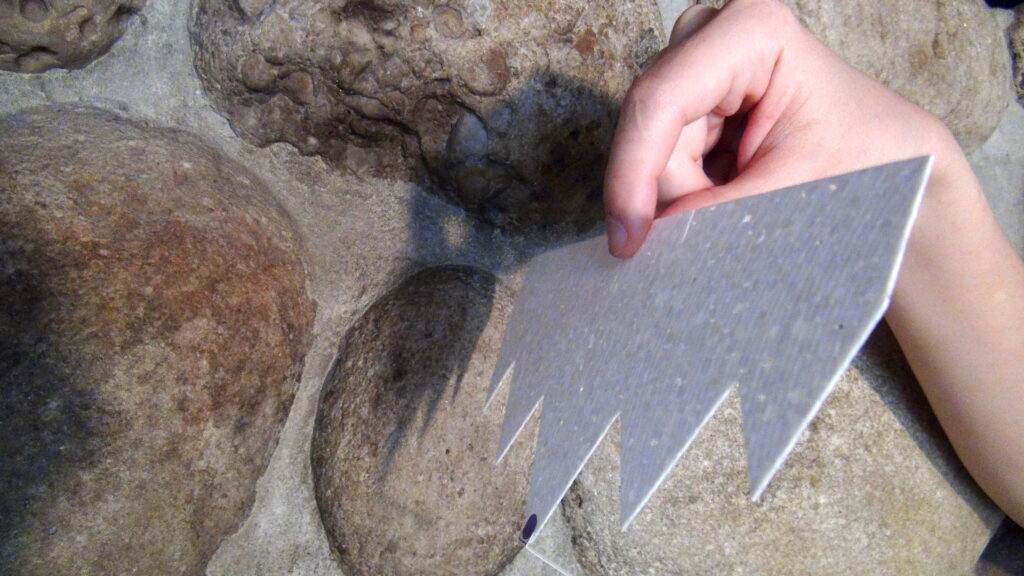
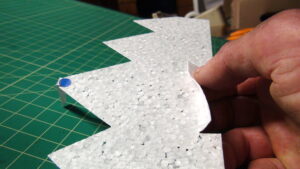
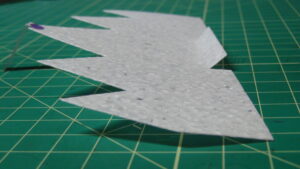
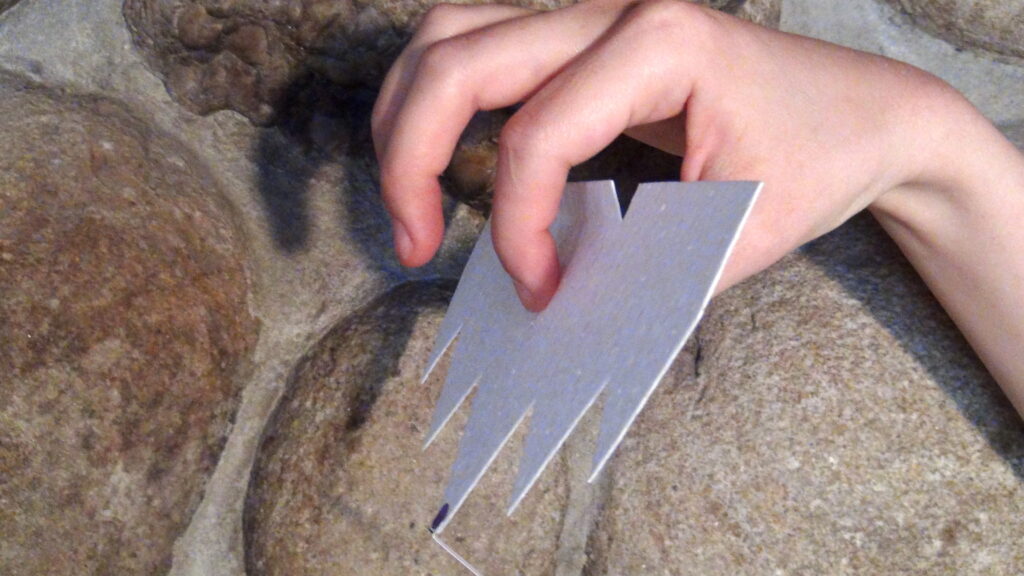
FOR RETURNING CUSTOMERS: Here is the difference between the old and new Jagwing design:
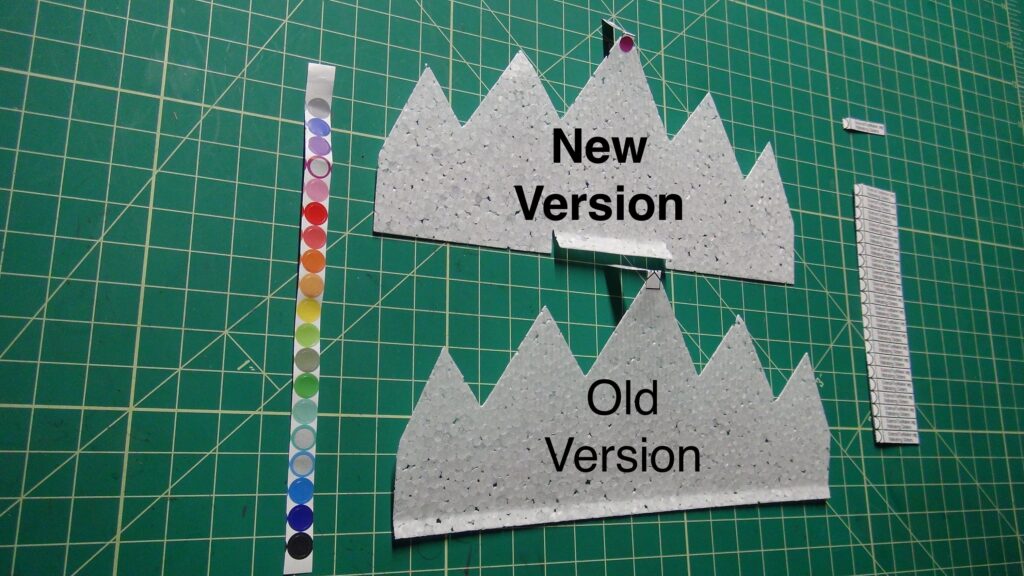
The old Jagwing has the elevon folded all the way across the back. Kids had trouble freehand bending it. If they used a bending jig or taped on a pattern, it took a long time—a problem if they only had a class period to make and fly—and that method of folding imparted static cling to the foam. So then the glider would stick to the board unless they took even more time to discharge the static. But with the new design, above, the shorter but fatter elevon is easy to bend up with a thumb and finger since the sides are already cut.
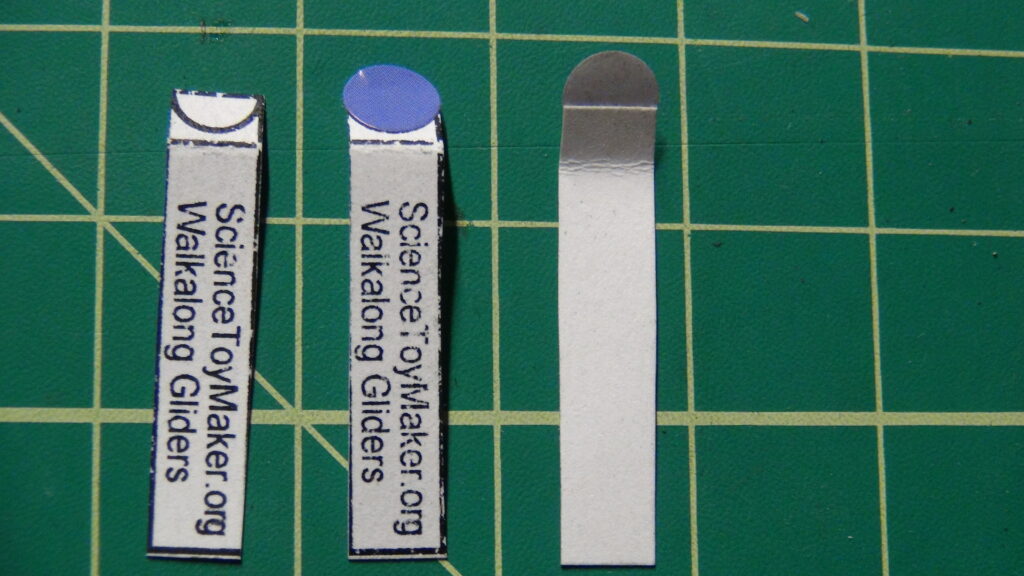
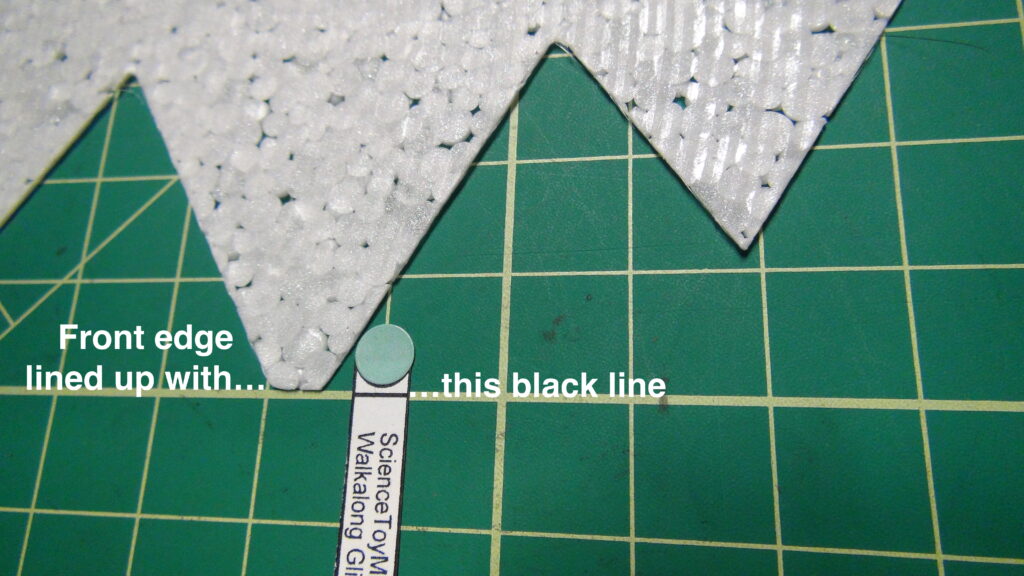
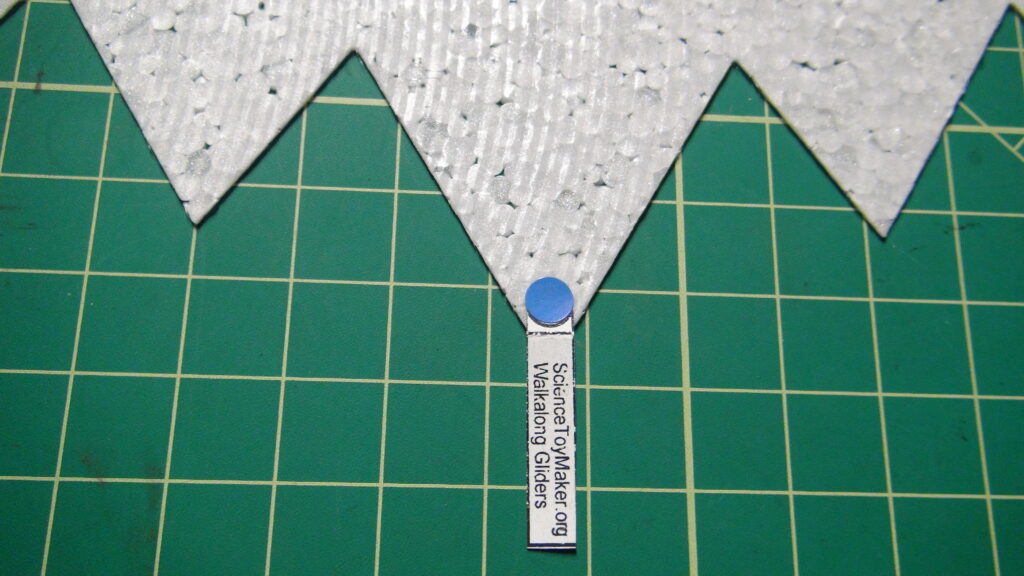
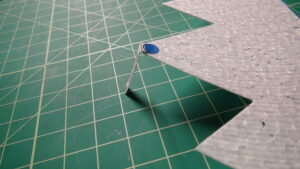
The other change is how the front weight/landing gear is attached. 3/4" and 1/2" tape widths are common in schools. A square of 1/2" tape has a significant weight difference than 3/4", and that affects the pitch characteristics. So now I am bypassing that whole complication by sending along round stickers so there is uniform weight.